

Emma
- Virginia Redlon
- May 11, 2018
- 5 min read

Updated: May 12, 2018
Emma Porter is a former Division II soccer player. A difficult time in her life caused her to leave her school and soccer, when the symptoms of her diagnoses of depression, anxiety, bipolar and another non-specific mood disorder, drastically flared up. Transferring schools, Emma went on to play Division III soccer and lacrosse, and eventually graduate from Purchase College, but this success didn’t come without struggle.

Below, in a Q&A, Emma discusses her time as an athlete and her own mental battle, and her thoughts on society and mental health.
Q: When in your life did you first begin to notice any mental symptoms?
I began to notice symptoms when I was in my early teens, probably around the ages of 14 or 15. During these years I experienced depression, disordered eating, mood swings, and social anxiety. As I got older, around 18 and 19, I began to experience panic attacks and much more intense anxiety. I experienced weird pains all over my body with no clear underlying cause, daily panic attacks, sleeplessness, and mood swings. I sought help because I couldn’t function normally in my daily life. This led to a diagnosis of an anxiety disorder and depression, and I began taking an antidepressant and Xanax.
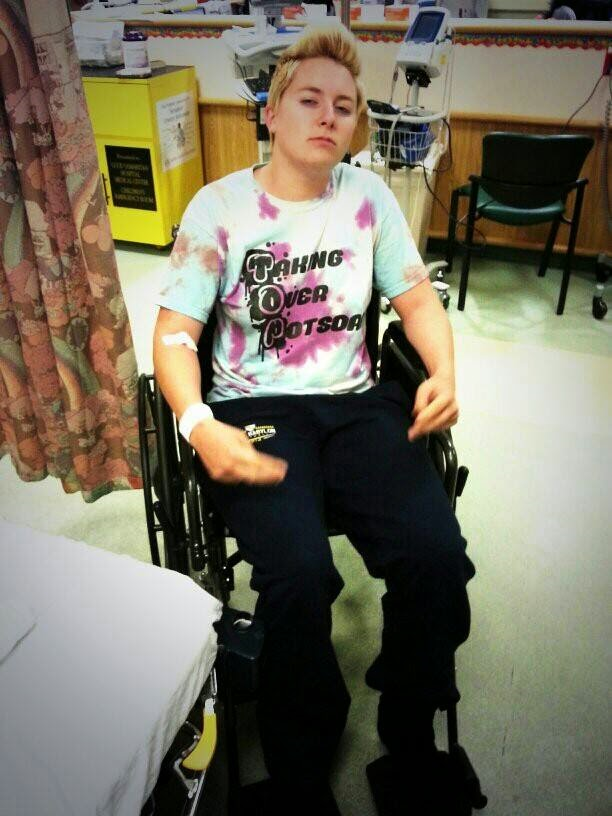
The more intense diagnoses I received came after my sophomore year of college when the symptoms I was experiencing caused me to be admitted to a psychiatric facility and take a semester off from school. I experienced intense mood swings in which I would be elated and happy for several weeks, then depressed and unable to get out of bed only a few weeks later. At the time I didn’t realize anything was that wrong, but looking back I realized that I was experiencing a lack of impulse control, intense feelings of hopelessness and sadness, fatigue, and irritability. Leaving school led me to seek out a psychotherapist, who diagnosed me with a mood disorder and prescribed me a cocktail of drugs, including Adderall, Lithium, Lexapro, Depakote, and Xanax.
I have [sought out treatment] several times throughout the years. As of now, I see a therapist and take an antidepressant, and this has helped me tremendously.
Q: Why does society want to silence talks of mental health?
It is easier to pretend mental health issues don’t exist than to have an open and honest conversation about them.
I think a lot of people associate mental illness or other mental health issue with weakness, and - in my experience - some people also believe that depression or anxiety can be easily overcome if the individual experiencing these things is strong enough.
It is hard to be honest about your own vulnerabilities and struggles in a society in which mental health struggles are stigmatized. And it is important to open room for a discussion about these struggles in order to begin destigmatizing the mental health struggles millions of people face.
Q: Do you believe there is a stigma against discussing mental health in sports?
Yes, I think so. There is a culture of being tough and not letting things get to you regarding all kinds of pain, including physical and emotional pain. At my former school, I played soccer and I would never have thought of asking for a break or a day off because my depression or anxiety was acting up. I didn’t even feel comfortable asking for a break when I had a very clear physical injury, so why would I ask for a break for something that no one could see?
At Purchase, the culture is a bit different, although mental health is still difficult to talk about. One of my first positive experiences with a coach understanding the way mental health can impact athletes was during the fall 2017 semester when I was playing soccer at Purchase. During preseason, I experienced a flare-up in symptoms because of some issues I was having in my personal life. I was a captain and I was supposed to be energized and ready for every practice, but I just couldn’t focus on soccer and I was having trouble eating. My coach was very understanding about it, giving me the time I needed to heal when I needed it and helping me find resources, including a therapist on campus. I am very grateful that she helped me through this difficult time and still believed in my ability as an athlete and a leader despite my struggles with mental health.

Q: Do you think this stigma is harder on male athletes?
Probably. Just generally, men are expected to keep quiet about their pain, especially if it involves emotions or mental health.
Socially, women are expected to be emotional and more vulnerable (which is also a issue in its own right), so it is easier for women to find a space in which they can talk about their mental health struggles. Unfortunately, men are socialized to “toughen up” and “act like a man” from a young age. Something that really helped me understand this problem is a book by Paul Kivel called, “Men’s Work: How to Stop the Violence That Tears Our Lives Apart.” In the book, he calls it the “act like a man box,” and discusses how the behavior of those assigned male at birth is policesd from the moment they are born. Men are told they cannot cry, they cannot show emotion, etc., and if they do, they are socially ridiculed or ostracized until they go back into the box.
I think male athletes probably experience this phenomenon to a larger degree than men who don’t play sports because the culture of male sports is hyper-masculine. Socially, male athletes are thought of as strong, fit, tough, muscular, determined, sometimes violent, heterosexual, etc.; they are generally viewed as the pinnacle of masculinity. Breaking down these barriers is difficult, but I think steps are being taken in the right direction.
Q: Do you believe society has seen any improvements recently? With more professional athletes coming forward to talk about their mental health struggles?
I’d like to think so. It’s amazing to see professional athletes use their voice to discuss their personal mental health struggles, but I do think there is a lot more to be done to allow people to discuss their mental health the way they’d discuss a treatment plan for a torn ACL.
Q: Does being active affect your mental health?
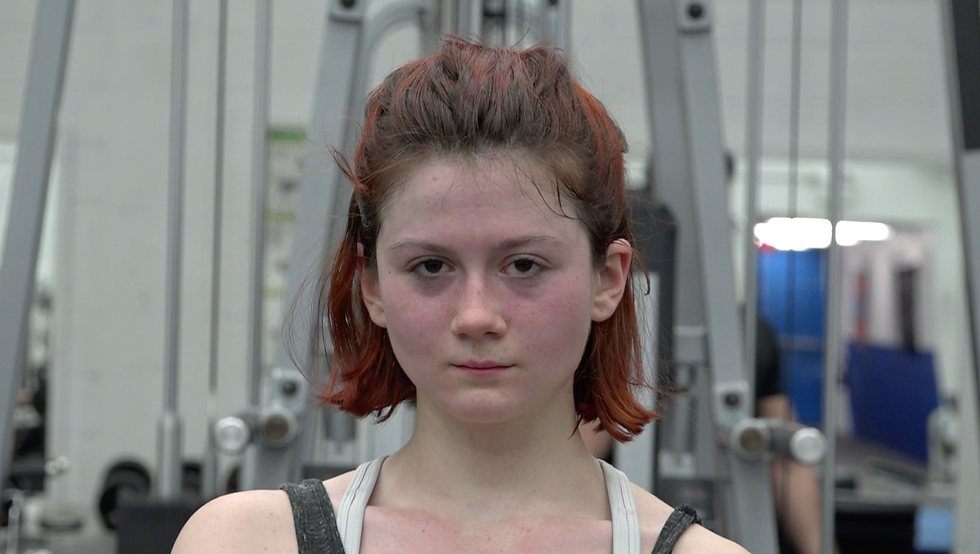
Absolutely if I’m not active, I often see symptoms start to flare up. Transitioning from being a student-athlete for four years of my life to not playing anymore has been difficult in this regard because I am no longer definitely active at least once a day. To help with this, I’ve started running and going to the gym a lot more because I know doing so positively impacts my mental health.
Q: For you, have sports been more of a stress-reliever or stress-inducer?
Generally staying active is good for me, so playing my sports was good for my mental health in that respect. However, when I played soccer at my former school, soccer was more of a stress-inducer than a stress-reliever. Probably because it was Division II, and I received a small scholarship, the expectations were higher. Soccer was something that became a source of stress rather than a stress relief, which was something I hadn’t experienced until I played at the collegiate level.
Despite this, soccer did help me structure my life in a way that has a positive impact on my mental health, and when I came to Purchase and played both soccer and lacrosse this continued to be true. Having a set and specific amount of time I was expected to dedicate each day to a sport meant I had to structure the rest of my life around this as well, so I had better sleeping, eating and homework habits as a student-athlete than I would have had otherwise.
Thank you Emma for sharing your story.
Comments